Showing posts with label book review. Show all posts

Sunday, December 2, 2018

Book review - The Children Act by Ian McEwan


In The Children Act McEwan lays bare several moral dilemmas, moving between their individual, even idiosyncratic nature, and their universality. The saving of a life, the strength of a belief system, passion, love and lust all feature.

He is a writer with a skill for bringing his characters to life. From the beginning the reader knows each of the players. The story weaves setting, personal stories and culture with ease, adding an essential ingredient for this particular book -the law and the normally hidden workings of the Family Courts. The ‘plot’ moves quickly, slowly, then quickly again, it never drags and rarely surprises but seems solid, well grounded in reality. 

But it is always a risk to expose professional lives -is this really the way a Family Court judge might behave?  In places it all seems a bit far fetched.  

The choice of third person narration is interesting as the perspective is always that of the main protagonist, Fiona Maye. Perhaps that says something about her approach to life -she comes across as impersonal and objective until her inner and outer worlds join in a rather critical way. 


It’s not often I read a book after I’ve seen the film, and as I reached the end of this short and very focused novel I learn why! Yes, film is a different medium, especially on the large screen ... for a start there is (usually) more than an audience of one. The book and reader are more mutable, intimate and I did not need the drama of the film ending to understand the story’s end. McEwan’s continued measured prose was sufficient. 

For a review of the film go to https://www.theguardian.com/film/2018/aug/25/the-children-act-film-review-preposterous-plot.

Back to the book, its just but only just worth 4 stars but not one of his best. 


Wednesday, November 28, 2018

Book review Education by Tara Westover


This is a powerful, raw and probably unique memoir that examines issues at the intersection of (amongst other things) the personal, family, belief, learning and organised religion. Westover’s prose is at once dense and flowing, hesitant and sure footed but above all it is authentic. 


She is a reliable narrator even though much of what she is writing about relies on her memory as a young child and young woman. Where she has doubts she lets the reader know. 


Westover’s 5* story left me thinking about two main aspects of her life, Firstly, the way our given intelligence and curiosity about the world, past and present, surfaces and how it does this come what may. In this way a child who never went to school becomes an original thinker -as she says, she becomes someone who writes history.  

Secondly, at times reading Tara’s struggles with herself in respect of leaving or staying within her family, I could hardly believe the impact of the strength of her Father’s belief (for example, that the world would end and they had to be prepared) on her. The bonds are almost unbearable and unbreakable when she is a child and they persist as she matures. Eventually the connections between her and her family start to fray and her knowledge of how others in and outside their religion (they are Mormons) see the world grows. 

One day when she makes her choice.  I won’t add the spoiler. Read the book! It is well worth your time to do so. 

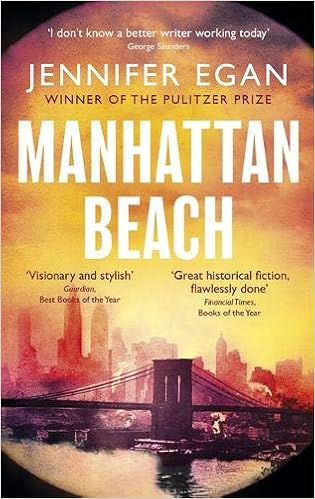
Book review Manhattan Beach by Jennifer Egan


I gave this book 4 stars, it would have had 5 with a different ending. In contrast to the rest of the story as it finishes Egan rounds down the shape of several characters’ lives and smooths out the edges of what happens to them. It all felt far too neat and tidy.  


That apart the book has much to admire, I learnt lots, e. g. about diving at the time, sea life during WW2 and the social mores of the place and time, and I enjoyed reading Egan’s writing. Her characters feel authentic, I could see Lydia, Mr. Voss, Dexter Styles and others, and Anna, who was always there, always living her life forward. 

Egan shapes the story in a straightforward way, yet lives diverge and converge all the time, creating interest and tension. A very good read. 

Tuesday, November 6, 2018

Book review Force of Nature by Jane Harper


I kept hoping this book would get better! The ingredients were there ... context, geography and characters but reading it was like reading one long beginning. The plot almost took of,  it touched on some current and important and often neglected issues and focused on authentic aspects in the lives of contemporary woman. But the distractions from these were too visible. That all meant an unwillingness by the author to go deeper and a story that was superficial and tame. A shame  - the prose flows, the detective character from her previous  book, The Dry, is well sustained if a little overdone. The book just needed more story and more depth to the main issues. 

That said Harper's second novel got 4* on Amazon

https://www.amazon.com/Force-Nature-Novel-Jane-Harper/dp/1250105633


and here's what the Guardian said

https://www.theguardian.com/books/2018/mar/10/force-of-nature-by-jane-harper-review

NB I read the book on my Kindle so the above image is from Amazon, with thanks.

Tuesday, October 30, 2018

History of Violence by Edouard Louis -book review

History of Violence by Edouard Louis, translated from the French by Loren Stein

In this book Louis narrates an attempt on his life and rape through multiple mechanisms. Mostly as victim, he reports what he overhears his sister telling her husband - clearly a second hand version of what happened as he, Louis, had told it to her. Through this we learn some family background and of the victim’s recent history. 

Interspersed into this eavesdropped account are moments when we learn about what happened via Louis as victim. Then there are paragraphs in the third person as if the narrator needs more distance from the horror of what has happened and the subsequent reporting of this to the police. 

So, a complex approach to the prose which focuses on a horrific unexpected attack and the equally difficult process of getting medical help, involving the police, and accepting the support of friends. Put simply that’s what the book is about -the attack and its aftermath for the victim. 

All is told in forensic details -the guilt, the unexpectedness, the swinging nature of helplessness and hopefulness about what is likely to happen as it happened and the insidious impact of trauma in the short and long term.


The writing is intense, it allows us into the victim’s mind and gives the reader access to thoughts that meander, unravel, minimise and exaggerate each and every aspect of his reaction to the trauma. When the story reaches a stopping point, a few months later, we reach the end. There is no conclusion because there can be no end to the impact of that night of violence. 

Not an easy book to read, not a book to enjoy but I was gripped. To spectate over someone else’s pain is a privilege and telling stories like this, ones that expose the fine detail of trauma through facts and memories is important. I was impressed with all this and would read more by the same author, though perhaps not just yet.


Sunday, October 14, 2018

Review of Wild Swans, Three daughters of China, Jung Chang


How I did I miss reading this book before now ... maybe because I thought it was a novel, and remembered my past struggles to read long family sagas when the geography, names and political culture need to be assimilated along with the narrative. A few pages of Wild Swans and I found that nothing like this applies to Chang’s flowing prose exploring life for her family in China from about 1900 onwards.


This book tells an extraordinary and heartbreakingly true story, it is deeply honest and has a reach that opened my eyes to a way of life of my fellow human beings that I had no idea about. As other reviewers have said, this is an important book and written, as it is,  in plain language, it is a wonderful way to learn history and hopefully, to learn from that history, even when all happened is far, far from a personal experience. It combines, with great skill, a post mortem on a political ideology and a forensic view of family love, loyalty and longevity. 


There are 700 pages, so it will take your time but it’s easy to pick up and start again. I had a 2 week break from it while I read a book group book. I restarted yesterday evening and was quickly engrossed again. Wild Swans is non fiction at its very best. 

As you can see from the photo here I read an old copy of Wld Swans. There was something magic about knowing that many other hands had held this book, had read its words. Had those readers, like me, been amazed, horrified and saddened by what they had read? I'll never know but that doesn't matter. We have all read it. Now it is your turn.  I can't send you the copy with its coffee stains and creased spine but ask around, someone you know might have a copy and there's always the library. 

Finally, on this wet Sunday a photo of my first homemade sourdough using Maud, who is, for the uninitiated, my sourdough starter from Hobbs House Bakery. 


As it says Maud is refreshed and resting. Well. most of her is, let's not think about what will soon happen to the portion i used for this loaf. 

I am waiting for the slow rise of this loaf in my not very warm kitchen. It will happen I need to be patient ... perhaps its time to start a new book or to find my much neglected knitting. 

Thursday, October 11, 2018

Hot Milk by Deborah Levy -my review


We are discussing this novel this evening at my Reading Group meeting. It is chez moi so I've just put the white wine in the fridge and found a bottle of red.

Regular readers here will know that I post reviews and mostly those are regular as well. I have kept log of what books I read for many years now so this is just an extension of that. In fact it is that, copied and pasted from my new e reading notebook, which is part of my effort to travel between homes with less stuff. Now instead of several notebooks including the reading log, I have e-notebooks on my iPad.

That's enough of that, here is my review of Hot Milk -a book I gained a lot from and enjoyed more than the last Levy book I read.


Hot Milk by Deborah Levy, Reading Group book, October 2018, 4*

This book is unforgiving in its examination of the mother daughter relationship and the role of the mind in physical illness.Sophia and her Mother, Rose are seeking a cure for Rose’s inability to walk and obsession with pharmaceutical and surgical ways to solve her problems. This is the backdrop to a post-mortem on how family changes cast an indelible mark on individual lives. Levy slowly reveals how Sophia falls apart and her attempts to put herself together whilst all the time thinking others, particularly her Mother, are the problem.

The timeframe and geography (Spain, the beach, the arid countryside) are tight and this gives an air of everything happening in a capsule that might burst at any time. We, as readers, are observers of control lost and gained -the prose reflects this - with incremental shifts of power creating tension and uncertainty. A book lacking in romance, that keeps its attention on the grim realities of how people relate to each other.


Levy offers readers the challenge of first person narration -we only see others via Sophia, and by their actions and speech. She is not exactly unreliable but she is broken so, like her computer screen that she drops in the opening passge, and her, our view has cracks and distortions. Also metaphor use is of note .. the howling dog and the chickens that Sophia rescues which led me to thinking how much this book is about seeking rescue; from ourselves and from the chains we see between us and other people when, as Sophia eventually learns, only we can effect the change we need.  

Its not a long book, it has sections that are uncomfortable to read but it drew me in and i wanted to keep following Sophia's life as it fell like sand though her fingers. 

Sunday, September 30, 2018

Wabi Sabi by Beth Kempton - my review


This book almost belies it’s subtitle ... ‘Japanese wisdom for a perfectly imperfect life’ ... because it is a perfect book. It looks very good, the cover and pages feel wonderful and when you get inside it’s cleverly set out, well written and full of beauty. The sort of beauty that guides, explains and bestows wise words on the reader. 


I met Beth on an Arvon writing retreat and heard a few early paragraphs of her book. Her research, personal experience and knowledge shine through her excellent prose. It has been a pleasure to read Beth’s treatise on and the applications of Wabi Sabi to ordinary lives. 


This is a book I will turn to when I need reminding about the important things in my life, about how to love, how to think more wisely and how this all might feel. And, importantly, to read when I need helpful and confident messages about the perfect nature of imperfection. Beth - thank you so much. Everyone else - do read this book. 

Tuesday, September 11, 2018

The Beautiful Cure, Harnessing Your Body’s Natural Defences by Daniel M. Davis - a review


This is a book that shows how the story of a complex and vital-to-health scientific paradigm and the pursuit of uncovering knowledge can be as exciting as any manufactured story. In this book it is our immune system under scrutiny, the ups and downs of how its elemental cells were discovered and the development by myriad international scientists of what is now known of the ways those cells cooperate for our good health. 


Davis writes well, reminds the reader when necessary and not too often of the basics. We learn lots about how science is done, how scientists do and don’t work together and the influence of grants and the value of discoveries to both people and pharmaceutical commerce. 


I was pleased to be slightly familiar with many of the terms and some of the basics about our immune system. That made the book an enjoyable and exciting read with valuable insights that increased my already huge fascination and admiration of the way our bodies are built and the way they work or sadly, sometimes don’t work at all well. 

Really pleased to have read this book. Highly recommended. 

Tuesday, September 4, 2018

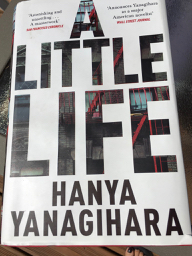
A Little Life by Hanya Yanagihara a review


This is a formidable and lengthy novel. Other reviews say it is set to become a classic. Set in contemporary times yet never stating the years it covers, it is, on one hand, about four friends who meet at a prestigious US college. But they are really just the backdrop. The story is Jude's and it is a disturbing, complex, raw, sometimes horrific story. 

The geography is (mainly) in New York, and the cast is almost all male and they, some from birth and others eventually, have lots and lots of money and fame (of sorts). 

The story is phased well, starting at a significant time in the lives of four friends - their immediate post college years to the end of their lives. Their back stories are woven between the rise and rise of each of them until the one significant back story, the one that makes the book the book it is, is left. This story, Jude’s story,  dominates for solid reasons and Yanagihara reveals its darkness, its reach and its power at a well chosen pace. 

The focus of the writing is a microscopic view of the inner life of a character. Running through all this is the theme of kindness and love, how these impact and influence when given with and without judgement. Overlying this are issues of how we see ourselves, how we think others see us, how and why we keep our secrets hidden, and why this matters.  

Yanagihara also brings to this book the body as character. Its weaknesses, what it can reveal and it’s resilience are all explored. One aspect of the body dominates -the skin. The organ that sits between us and others. The largest organ in our body. The skin can be seen as the way we can be read by others. Perhaps also, in this instance, the way we tell our story and our story is told.


Yanagihara’s writing is particularly fine at key moments when she catches you, as reader, unaware of the turning point that is about to happen.  Overall this is a very smooth read. I found some of the point of view switches confusing and wondered why I was expected to work so hard to understand these sections. 

It’s also of note that the few women characters are there as sidelines, for the purpose of context, for example, to portray heterosexuality or motherhood.  As I was reading the book I asked myself about this choice. What was gained and what was lost by this imbalance. Was it deliberate? How did it contribute to understanding Jude and the way he chose to live his life? So, a good book, often harrowing, often romantic, frequently brave. 

Do read it. Take your time. You will need to! Prepare to be shocked, to weep and to admire. 

PS


Something a little different to end with. Slow stitching as the Jasmine climbs; August 2018.


Thanks to the Craftivist Collective. More info here https://craftivist-collective.com

Tuesday, August 28, 2018

Rosie by Rose Tremain -a review


Another lovely looking book with good size font, discrete chapters that follow RT’s life from early childhood to her first writing success and lots of family photos with young Rosie. 


This is an open, thoughtful autobiography aimed at giving an insight into the writer’s desire to write, and how that writing has been shaped, influenced and directly taken from early life incidents of note.

I'd already read many of her books, and then this.  A god order of reading.  As the chapters move from the life of RT as a very young child, to school and take in the lives of key people in her life, the writer and her books emerge. A privileged and fascinating picture emerges and there are some great touches. I particularly liked the evolution of her name and the way RT's adult friendships were given their roots.

The style is easy read, in RT’s usual gentle and powerful prose. And it’s a well chosen length. Nothing is laboured. Everything serves a purpose and is contained within the author’s aim to recall a vanished life in order to provide some answers to the question : how did you come to be a writer? 

Posting reviews of the books I've read in the past few weeks emphasises to me that I do read a lot of books. More so when its too hot to do anything else very much. A quiet few moments with one more chapter ... what could be nicer after an hour of clearing a bigger run for our hens!!!! Or, after more free motion quilting. I find this stitching method very intense  -- it needs to be followed by quiet time with my book. 

Do let me know something about your reading habits. I'm always looking for recommendations to add to my to-be-read list.

Find out more about Rose Tremian and her books here https://www.rosetremain.co.uk

Friday, August 24, 2018

Review of The Truth about the Harry Quebert Affair by Joel Dicker

Billed as a ‘best seller’ and ‘book of the year’ this is a long read with the appearance of a typical small town crime novel. And not only has the crime (the disappearance of a young girl) remained unsolved for thirty plus years but the engaging but slightly annoying protagonist is writing about said crime. 


In this way the book extends into the territory of why write, what it is to write and further into the murky water’s of writing about the truth, or people’s versions of the truth,  and of who has the right to document and make public the truths of other people. This leads the story into big city/publishing politics and the selling value of public interest, or is it prurience, in the hidden lives of the famous and not so famous. 


Dicker, and his translator (from French), Sam Taylor, do a good job of guiding the reader through the complexities of the story as it swings back and forth through thirty three years. The characters are well established, and the plot has enough twists and turns to keep a reader’s interest. I found the background detail on Harry and Marcus rather tedious and the writing in these sections a bit banal. Otherwise the prose is strong and authentic. 


This is a book is about love, snobbery, atonement, tenacity, and secrets and how these  all work to shape the very different lives of the cast of characters. It is an ambitious book that took me some time to get into but the story is intriguing and the overarching theme of fiction-making with truth is thought provoking. That makes it, for me, a good read.


More generally, this is another in the short list of translated novels I've read recently. All translated to English (obviously!!!) this book from French, others from Icelandic and Spanish. Where next I ask myself?   

And while on the subject of lists Joel Dicker's (JD) book is set in a small America town, the setting for many novels by Anne Tyler and Elizabeth Strout. Add to that the number of similar small towns that Lee Child writes of in his Jack Reacher novels ... quite a list of authors, well, four anyway. What is it about those places that two American authors (AT and ES), one (LC) British born but living in the USA), and one (JD) Swiss and living in Geneva, and I'm sure there are more, what is it that takes their writing to those similar settings?  It is as if the setting is another character for these writers. As if the psycho-geography of the streets, commercial sectors and environs of the town have agency in their stories.

For me, there is a message here. Several in fact. One of which is how important it is to read. To read widely, with thought and to learn from others ...  thank you  LC, JD, ES and AT and others .... 

I'm interested in your thoughts on this. Other questions also come to mind. Would similar settings in other countries be the same? Is there something unique about small US towns? I think I get the small town bit but the American angle is interesting. Your thoughts please. Leave a comment ... send me the name of book set in a small UK town where the settings has a strong role ... please!! 

It is raining here, gently watering the plants and freshening up the air. And we are drying figs. Nuff said. Back soon. 

Tuesday, August 21, 2018

A Cat, a Man and Two Women ... a Review

Junichero Tanizaki  translated by Paul McCarthy


A beautifully produced small book with a  title that says it all ... except that really there were three women. Shozo’s mother played an important role, typically with behind the scenes mother-in-law management for her own ends. Lots of manipulation in this book ... hidden motives, and the cat, Lily, came in very useful as the tool for all this to happen. So an unusual take on a very usual story of jealousy, betrayal, weakness, love and some silliness. The different cultural setting added interest ... would this happen in an European family? 
Gentle and elegant prose style, an ending that said nothing about the future of the characters and some insights into how obsessive people can be about a cat. 

An enjoyable read and the third translated novel I've read in the last few weeks. Thinking of this reminds me that I should read translations more regularly. They have more to offer then simply the story. The manner of the translation is key ... here it was good, and are a way to more understanding of other cultures. 


As i'm now at home in France it feels timely to add to my reading list a novel translated from that language. I know very little about contemporary French writers and what they are writing. Suggestions for a good read please. 


Sunday, August 19, 2018

The Clock Winder by Anne Tyler - Review

Image result for the clock winder anne tyler review

This is the first of Tyler's books I've read for a while and it is very good. Family, growing up, loss, small town life, what goes on in our heads - all written in thoughtful and forensic prose. There is a good shape to the story, incidents are well left to the reader to ‘know’ what happened afterwards and subtle, clever and neat changes to the shape of the character set.

For me, as a writer, some key point about this book are:- 

 - character consistency , Mrs E after her stroke, Elizabeth's job when she returns to her parent's home as a rehearsal of the ending, possibly I should have picked that up but I didn’t!

- big events, Timothy’s suicide, happen and, thank goodness, this book does not turn into a police procedural. It keeps its focus on what happens within people, away from the public/legal response.

- subtle hints at how time has moved but events also tell the reader to this, e.g. children are born, the nuance of hints of the external viewpoint of the family group, from the Dr. 


- parent/child dynamics, three examples,  the Evesham’s, minor, Elizabeth’s family esp. father and, right at the end, Peter's wife and her family.  So very well done.

Finally, there is the title. Well chosen for a book that is about time and the passing of our lives. 


Other reviews are available!  Read what the media said 

from US for example, in the New York Times  https://archive.nytimes.com/www.nytimes.com/books/98/04/19/specials/tyler-clock.html

and from the UK in the Sunday Times 
https://www.thetimes.co.uk/article/review-clock-dance-by-anne-tyler-at-the-speed-of-life-qdrj77j9c 


Let me know what you think of my review and of Tyler's 22nd book. I look forward to reading your comments. 


NB Picture credit: copied from Google search 

Monday, August 7, 2017

Summer 2017 books & review of The Memory Stones

I've just finished reading The Memory Stones by Caroline Brothers, see https://www.amazon.co.uk/Memory-Stones-Caroline-Brothers/dp/1408844494/ref=sr_1_1?s=books&ie=UTF8&qid=1502122304&sr=1-1&keywords=the+memory+stones

Product Details

Really enjoyed this novel. Clearly based on sound research but written very allowing the evidence stayed in the background while the plot, characters and powerful emotions took centre stage. The web link above gives the outline of the story. For me the book's strength is in the way the story embraces all those affected by Military Rule and stretches this effectively into future generations.  In places the scenery was in danger of taking over but these passages helped to set the pace of what happened to match that of the characters experience. A very good read. 4.5 stars.

Finishing one book set me thinking about all the books around me this summer ... here's a few pics.

 I went to a workshop run by Robert Vas Dias last year ... good to have time to read his Still Life collection.


I'm learning a lot from this book but need more practice at image transfer with Gel medium 

I heard this author interviewed on BBC World service  .. looking forward to starting this tonight 

Another purchase after an author interview but I'm struggling with this even though its set in New Zealand and I recognise much of the geography 


A bit tedious! I'm trying to read two pages a day to improve my French!!!


My breakfast book with lots of helpful examples of how using a sketchbook leads to original textile work 


And if I'm to progress my knitting I'll need to find something to follow Middlemarch on Audible ... another classic comes to mind. The convenience of bluetooth headphones and George Eliot's wonderful writing had me hooked. I struggled to read the book in print but it was a great listen. I'm now watching the BBC series. I'll let you know what my next choice is. 


Sunday, April 9, 2017

Sunshine and a very good book


Its summer in April here ... such a joy to stitch and read outside. 


I've added some feather stitches to the stitch-a-day piece ...

and finished reading Sarah Lapido Manyika's wonderful book. Like a Mule Bringing Ice Cream to the Sun. 

This is a short coming of old  age book, with all the issues of disappearing independence that reaching her mid-seventies and slipping from the edge of the bath brings to Morayo De Silva. She is on of the most memorable characters I've met in a novel for a very long time. The prose is beautiful, events and the other people in Moraya's life are touched on in just the right amount of detail and honesty   ... I just loved it. 

Read other reviews here https://www.amazon.co.uk/gp/product/B01BLQN8RI/ref=oh_aui_d_detailpage_o00_?ie=UTF8&psc=1 

and here https://www.goodreads.com/book/show/27971013-like-a-mule-bringing-ice-cream-to-the-sun


Tuesday, March 7, 2017

Book review: The Essex Serpent

Just finished this very good book. Here's the long review https://www.theguardian.com/books/2016/jun/16/the-essex-serpent-sarah-perry-review-novel


and my short version is - beautiful prose, characters that were strangly and wonderfully out of character and a book that carried the research that shaped it lightly. Well worth the time it takes to read it.

A beautiful day for walking

... more of the London Loop. This time from Malden, through Kingston to Bushy park https://www.royalparks.org.uk/parks/bushy-park.

Springy grass, muddy paths, pavements, local wildlife and the splendour of a reflected tree ...


Friday, February 17, 2017

From this to this and a great book.

Briefly and in pictures  ... a few days of dyeing fabric, rinsing, washing, and this morning the best ironing task ever to reveal the results.

First the soaking and seeping

and after the bucket and machine washing hanging out to dry ...

and finally, discovering the patterns and shapes  - I found faces, flowers, a staircase and lots of forest ... 


And in case you missed my tweet about this wonderful book I recommend it as very good read. Powerful, insightful, I was captured by its relevance to the present, authenticity and straightforward style. I just kept wondering how I had missed it all these years of reading ... thanks to my book group I've now had that pleasure. One to read again. 

Wednesday, November 5, 2014

Book Review: Strange Bodies by Marcel Theroux

This book was sent to me as a 'prize' (3rd place in a poetry competition), I picked it from the to-be-read basket when I needed to be reading a book that would take my mind of some stressful issues in daily life ... don't tell me you don't have such times!  Strange Bodies came to my rescue. Here's a synopsis of the story 
http://www.theguardian.com/books/2013/may/24/strange-bodies-marcel-theroux-review

All I can add is that, very unexpectedly, I found myself really enjoying Theroux's well crafted and, as the title suggests, very, very strange story. It has an authentic account of domestic and academic life and the literary texture that overlies those lives and the new life that overtakes Nicholas adds interest, but never detracts, from the overarching narrative. 

Verdict: a very good read.